
When “Pay Attention” Isn’t Enough: Looking at Body Organization First
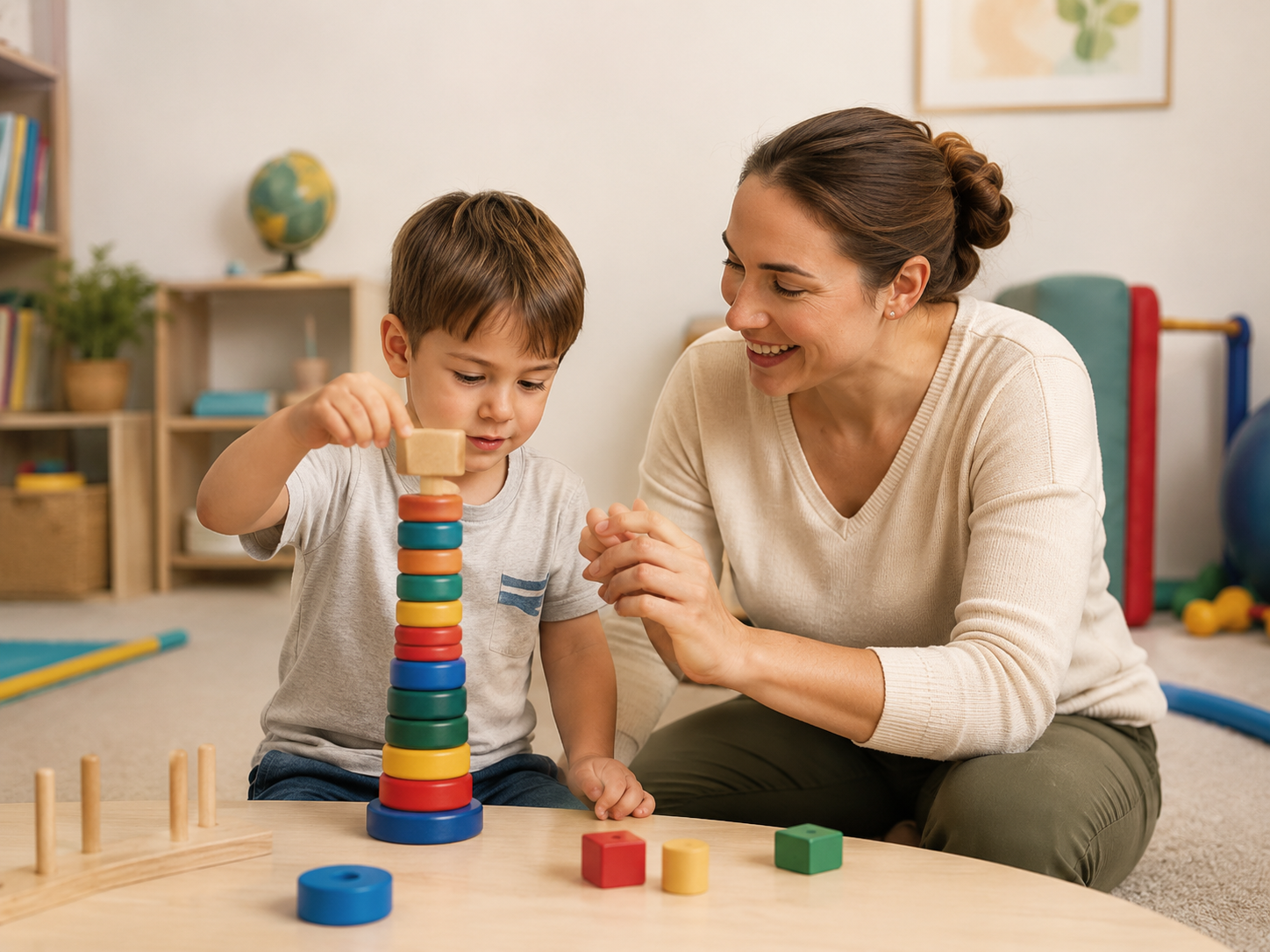
A child may be looking, listening, and trying very hard — but still struggle because attention is only one part of successful learning.
When a child is moving during circle time, leaning heavily on the table, leaving an activity, or looking away while someone is speaking, the difficulty is often labeled as attention.
Sometimes attention is exactly where we need to look. But “attention” is still a description of what we see. It does not necessarily explain why participation is difficult.
Before deciding that a child needs to try harder, sit longer, or receive more reminders, I often want to ask a different question:
What is the child having to do with their body in order to participate in this activity?
That question does not replace an attention assessment. It widens the lens.
Participation has hidden demands
A seemingly simple activity can require a child to do many things at once. Sitting at a table, listening to a direction, and responding may involve:
• maintaining a stable position;
• knowing where the body is in relation to the chair, table, materials, and other people;
• filtering or tolerating sounds, touch, movement, and visual information;
• understanding the language being used;
• holding the goal in mind;
• planning a response;
• coordinating the movement needed to respond;
• monitoring whether the response worked;
• and staying with the interaction long enough to continue.
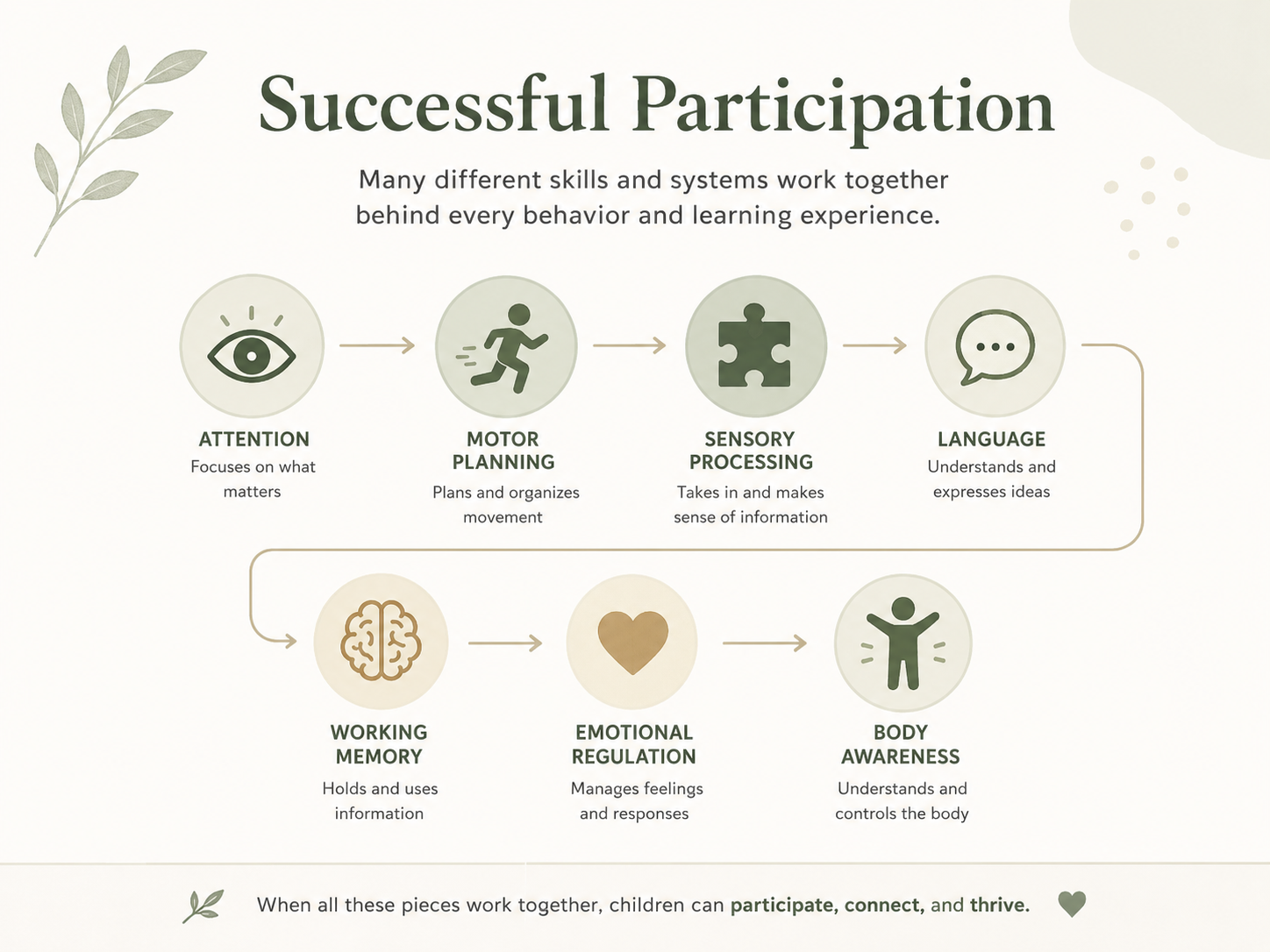
If one or more of these demands requires substantial effort, less capacity may be available for the part adults identify as “paying attention.”
This does not mean that posture causes attention problems or that every child who moves needs sensory input. It means that attention occurs while a child is also managing a body, an environment, a relationship, and a task.
What I mean by body organization
“Body organization” is not a diagnosis and it is not one single standardized clinical construct. I use it as practical shorthand for the child’s ability to coordinate several processes well enough to act with purpose.
This can include postural control, body awareness, motor planning, sensory regulation, timing, coordination, and the ability to maintain an action across time.
A child may understand what to do but have difficulty getting the body into position to begin. Another child may begin easily but lose the sequence after the first step. Another may stay organized while moving but struggle when asked to remain still. Someone else may manage the motor part until language, social interaction, or an unexpected change is added.
The outward result can look similar: drifting away, rushing, leaning, repeatedly getting up, waiting for an adult to do the task, or seeming not to listen.
The underlying demands may not be similar at all.
Attention and stillness are not the same thing
Adults often judge attention by how quiet a child’s body looks. A still child may be attending, but stillness alone does not tell us that. Likewise, movement does not automatically mean that attention has been lost.
A child may listen more successfully while standing, pacing within a defined area, holding a resistive object, or participating through movement. Another child may become less available when movement is added. The useful question is not whether movement is good or bad. It is whether a particular form of movement changes this child’s participation in this activity.
That distinction matters. Otherwise, movement can become another generic strategy adults prescribe without observing whether it actually helps.
Look for patterns, not one isolated behavior
Body-organization demands become clearer when we compare situations. Adults might notice:
• whether participation changes when the child’s feet and back are supported;
• whether standing is easier than sitting;
• whether the child can attend during an active game but loses the sequence during a stationary task;
• whether performance changes when the motor response is simplified;
• whether the child knows the answer when allowed to point instead of speak and move simultaneously;
• whether movement before the task helps, has no effect, or makes organization harder;
• whether difficulty increases when imitation, language, waiting, or multiple steps are added;
• and whether the child can return to the activity after an error or becomes increasingly disorganized.
None of these observations proves a cause by itself. Together, they can help a parent or professional form better questions and select more useful supports to test.
Support the demand instead of repeating the instruction
If a child is not participating, repeating “pay attention” gives the child the name of the expected outcome. It may not give them a way to achieve it.
A more useful response may begin with changing one variable and watching what happens. Depending on the child and activity, that could mean:
• providing stable foot or trunk support;
• allowing a standing response;
• reducing the number of simultaneous steps;
• using a visual representation of the sequence;
• demonstrating the action before expecting imitation;
• embedding the learning target within purposeful movement;
• shortening the first attempt while preserving successful participation;
• or reducing competing sensory information.
These are not universal recommendations. They are examples of ways to examine the task rather than assuming the child simply lacks motivation.
Measure participation, not compliance with a posture
If the real goal is attention, it helps to define what meaningful attention would allow the child to do.
Are we looking for the child to notice a social cue? Follow part of a group activity? Respond to a direction? Stay connected during a back-and-forth exchange? Hold a goal through several steps? Return after an interruption? Detect and correct an error?
Those outcomes tell us more than the number of minutes a child remains in a chair.
A child can comply with sitting while being minimally engaged. A child can also move and remain meaningfully connected to the task and the people involved. The support plan should be based on the participation we actually want to build.
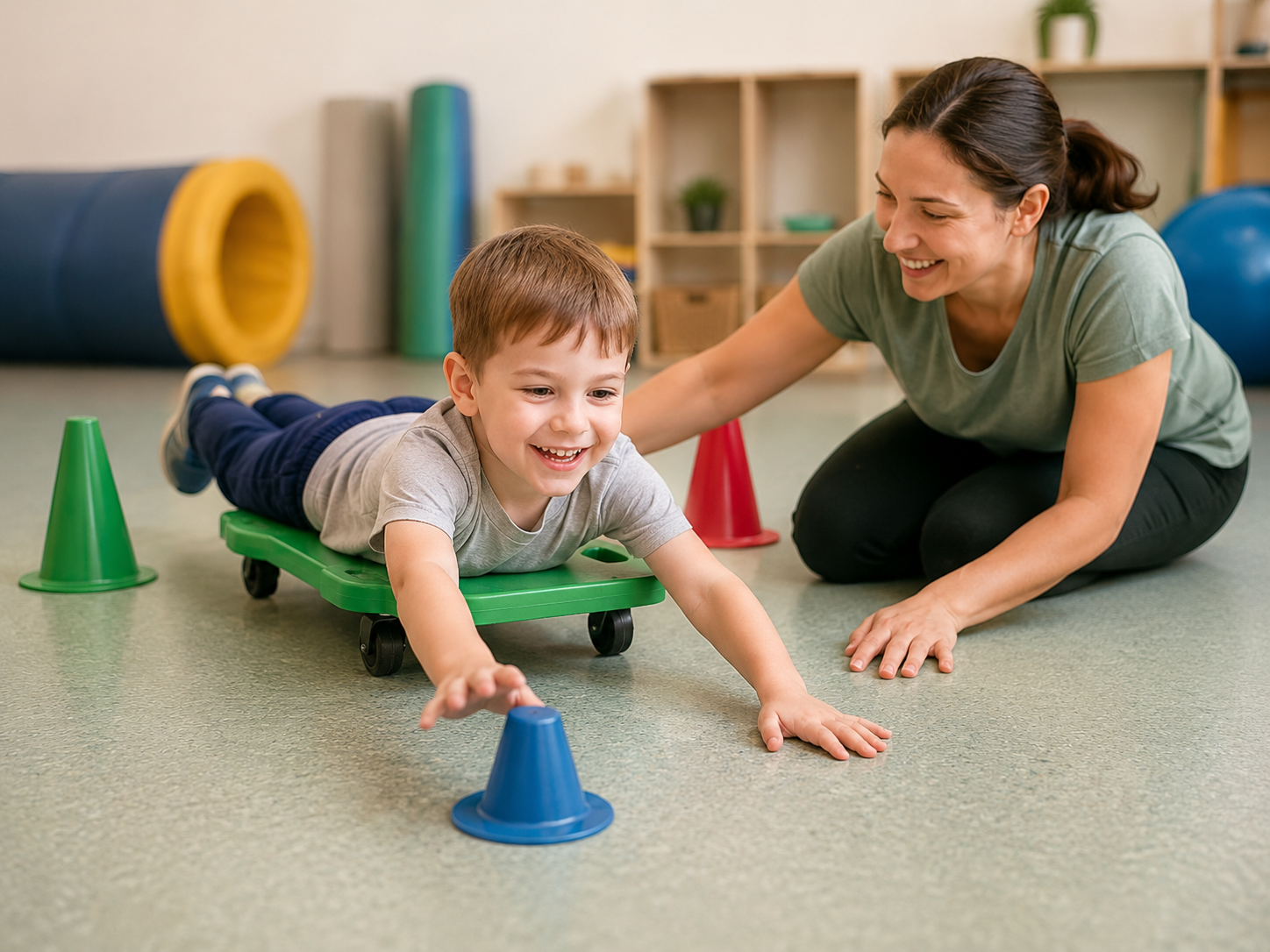
With the right support, children can build the skills they need to participate, connect, and thrive.
The larger point
Attention is real, and some children need direct support for attention and executive functioning. But attention is not separate from the body or from the demands of the activity.
When “pay attention” is not working, the next step is not always a louder instruction, a stronger reinforcer, or another movement break. Sometimes the next step is to examine what the child is being asked to coordinate—and which part of that coordination is making participation difficult.
That does not give us one neat explanation. It gives us a more useful place to begin.
Is your child understanding more than they can consistently show? Book a free 15-minute consultation or contact Activate. Integrate. to discuss what may be affecting participation and whether services are a good fit.