
The Look Back Matters: Understanding Social Referencing
A child approaches an unfamiliar toy, hears an unexpected sound, or reaches the edge of a new climbing surface. Before deciding what to do next, the child pauses and checks in with an adult.
That brief moment can be easy to miss. It may last only a second. But the child is doing more than looking away from the activity. They may be asking, without words: What is happening? Is this safe? What do you think? What should I do next?
This is one form of social referencing—using another person’s response to help interpret an uncertain or unfamiliar situation.
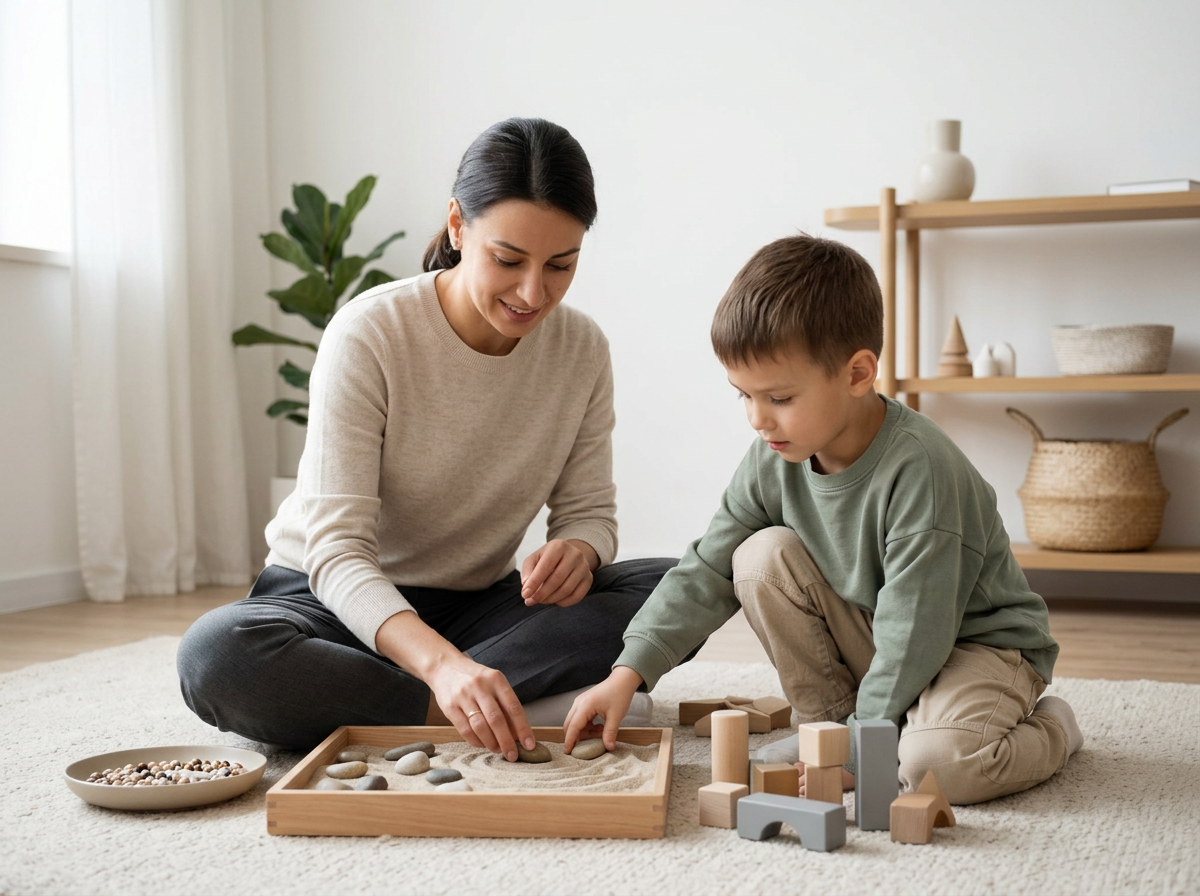
The “look back” is about information, not eye contact
Social referencing is often described as a child looking at another person’s face and then changing what they do based on that person’s emotional response. A caregiver smiles, tenses, gestures, moves closer, or changes their tone of voice; the child notices that information and uses it to guide the next action.
But the important part is not prolonged eye contact. The important part is the coordination among the child, another person, and the situation.
A child may gather information by:
glancing briefly toward a familiar adult;
turning their body or moving closer;
pausing and listening to the adult’s voice;
watching a gesture or change in posture;
bringing the object to the adult;
vocalizing, pointing, or asking a question;
or shifting back and forth between the activity and the other person.
If we define the skill only as “looking at my eyes,” we may overlook the ways a child is already checking in. We may also turn a meaningful exchange into a compliance demand.
Social referencing and joint attention overlap, but they are not identical
Both social referencing and joint attention involve coordinating with another person around something in the environment. The purpose of the coordination is different.
Joint attention is often about sharing attention, interest, or meaning: “Look at that!”
Social referencing is more often about using another person’s response to interpret uncertainty: “What does that mean, and how should I respond?”
The same interaction can include both. A child may notice a wind-up toy, look toward a parent to share excitement, and then check the parent’s expression when the toy suddenly makes a loud sound. Development rarely separates skills into tidy boxes.
Why the sequence matters
The visible glance is only one part of a longer process. The child has to notice that something is new or uncertain, interrupt the current action, orient toward another person, detect a useful cue, connect that cue with the situation, and then organize a response.
That sequence draws on more than social interest. It may involve:
shifting attention between the event and the person;
recognizing changes in facial expression, voice, gesture, or movement;
staying regulated enough to take in new information;
holding the situation in mind while checking the adult’s response;
planning the movement needed to turn, approach, pause, or continue;
and deciding whether the cue is clear and trustworthy.
A child can be interested in people and still miss part of this sequence. The cue may be too subtle. The environment may be too busy. Turning away from the activity may be physically difficult. The child may already be overwhelmed, or may not yet expect another person’s response to provide useful information.
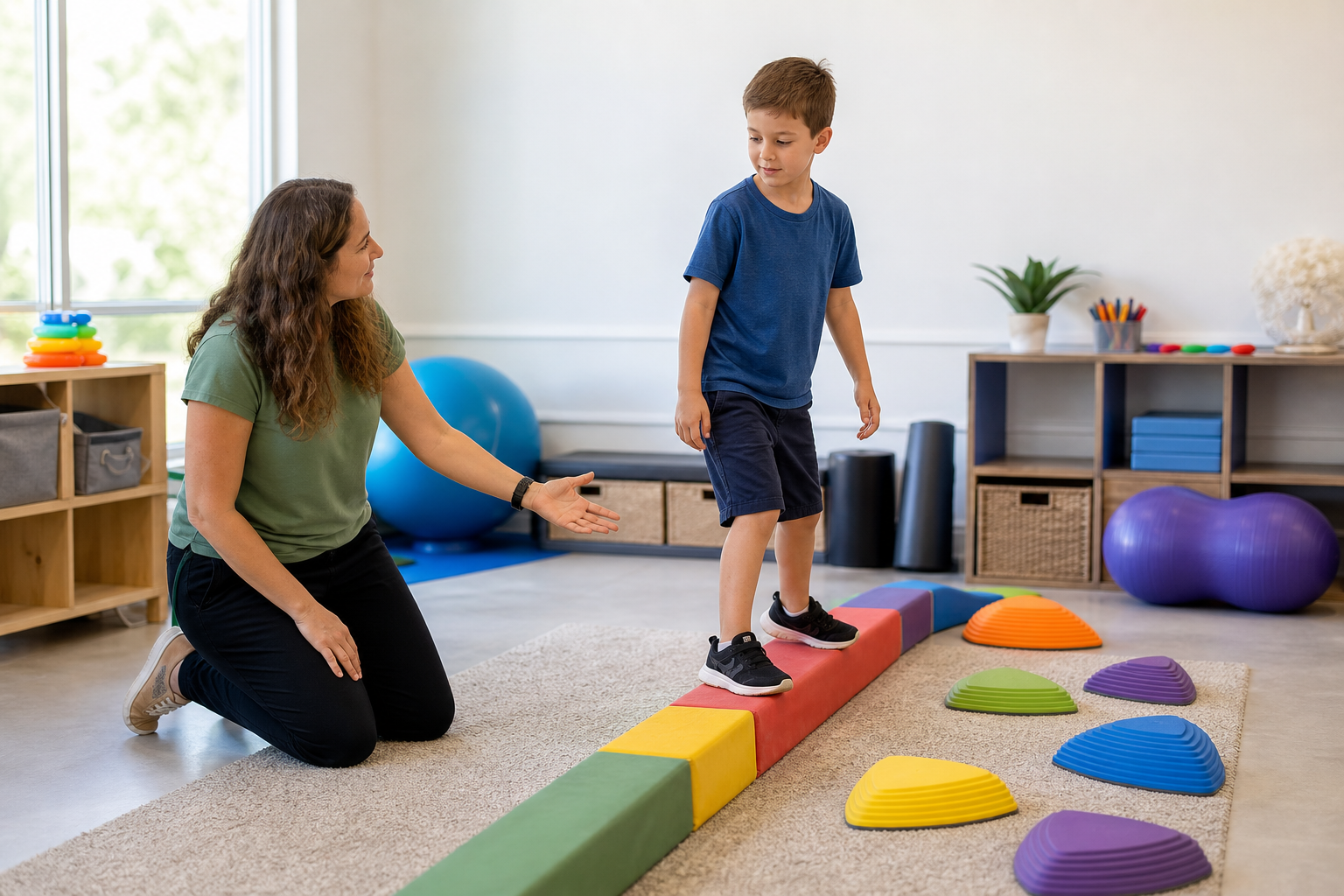
Familiarity and context change what we see
Children do not check in with every person in every situation in the same way. Developmental research suggests that familiarity, the level of uncertainty, and the perceived threat of the situation can all affect whether a child looks toward another person and how that person’s response influences exploration.
This matters in assessment. A child who rarely checks a clinician’s face in a new room may use a parent’s voice very effectively at home. A child may reference an adult during active play but not during a language-heavy task. Another may look frequently when unsure but have difficulty using the emotional information that follows.
Instead of recording only whether the child “looked,” it is more useful to observe the whole sequence:
What created uncertainty?
How did the child check in?
Which cues did the adult provide?
Did the child return to, avoid, approach, or change the activity?
Was the response different with a familiar person, a clearer cue, or a less demanding environment?
Those observations help distinguish a missed cue from a motor, sensory, regulation, language, or relationship demand.
How adults can support the skill without forcing it
Social referencing grows through meaningful experiences in which another person’s response is available, clear, and useful. It does not need to become a repeated test.
Adults can create better opportunities by:
Pausing before prompting. Give the child time to notice uncertainty and initiate a check-in.
Using more than the face. Pair expression with voice, gesture, movement, or positioning so the message is easier to detect.
Staying within the child’s natural field of attention. Join the activity rather than repeatedly calling the child away from it.
Making the response genuine and readable. A warm “You found it!” or a clear “Let’s wait” may communicate more than an exaggerated expression with no connection to what is happening.
Beginning with manageable uncertainty. Small playful surprises allow the child to practice checking in without becoming overwhelmed.
Respecting the child’s own information. An adult’s reassuring cue should not be used to push a child through pain, fear, or sensory distress.
Watching what changes next. The goal is not the glance itself. The goal is whether the child can use the interaction to participate, communicate, explore, or make a more informed choice.
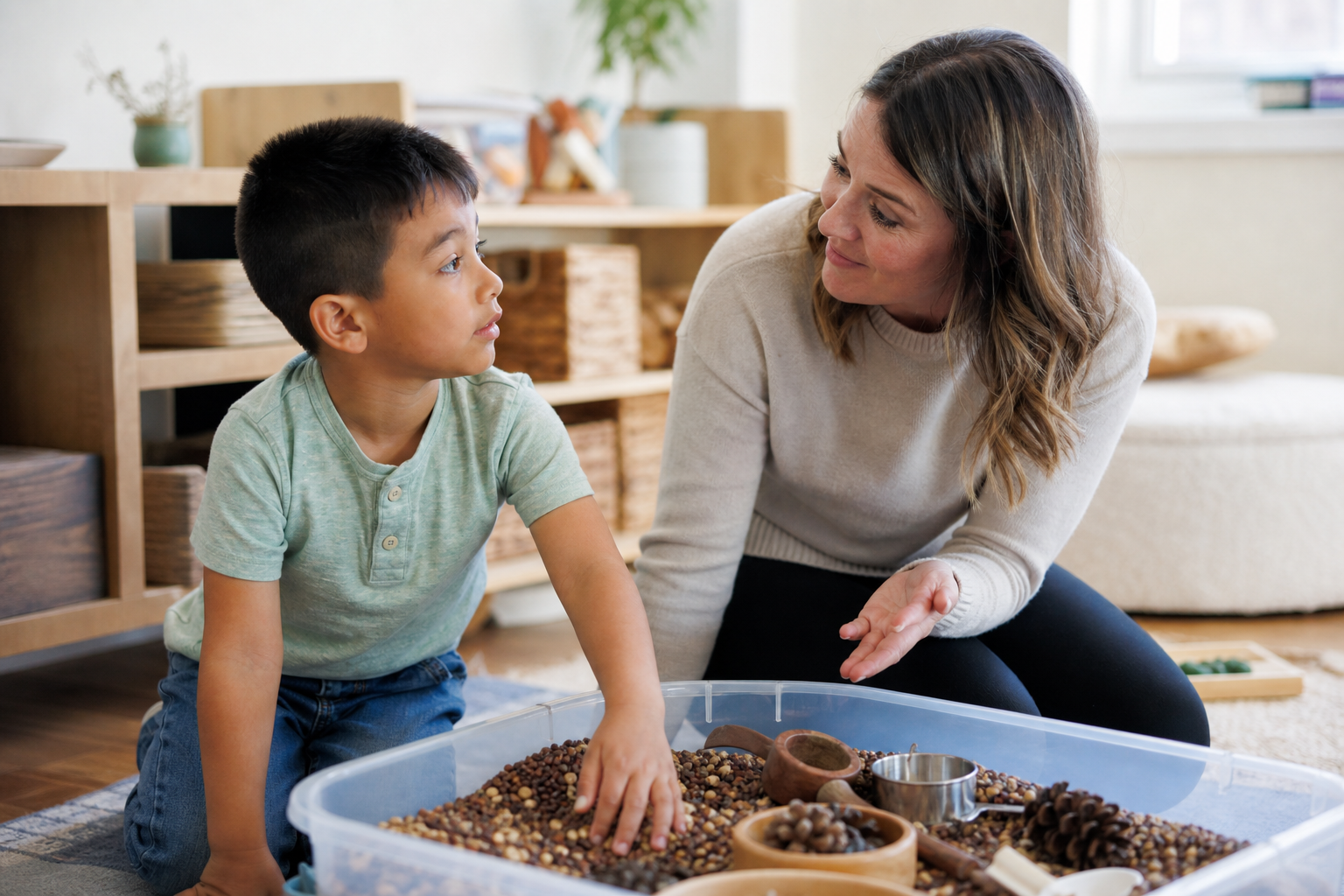
Do not turn every look into a demand
When a child checks in, adults may be tempted to ask a question, give a direction, or praise the eye contact. That can shift the meaning of the exchange.
Sometimes the most supportive response is simply to respond: smile back, acknowledge the uncertainty, make the cue clearer, or help the child organize the next step. The child’s initiative is the important part.
Social referencing should also not be treated as proof of attachment, empathy, intelligence, or willingness to cooperate. Children express connection and gather information in different ways. A single behavior cannot carry that much interpretation.
The larger point
The “look back” matters because it shows a child coordinating information across a person, an event, and their own next action.
For some children, that coordination happens quickly and almost invisibly. For others, it may require clearer cues, more time, a familiar partner, a simpler motor response, or support staying regulated in the presence of uncertainty.
When we look beyond eye contact and observe the full exchange, we can better understand what the child is already doing—and which part of the sequence may need support.
Does your child have difficulty checking in, sharing uncertainty, or using another person’s cues during play and daily routines?
Book a free 15-minute consultation or contact Activate. Integrate. to discuss what may be affecting social participation and whether services are a good fit.
Selected research
Walle and Campos (2020): familiarity, situational threat, and the function of social referencing — https://pubmed.ncbi.nlm.nih.gov/33384635/
Vaillant-Molina and Bahrick (2012): early development of social referencing using coordinated face-and-voice information — https://pubmed.ncbi.nlm.nih.gov/21895359/
DeQuinzio and colleagues (2016): social referencing and children with autism — https://pubmed.ncbi.nlm.nih.gov/31976939/